
Mortgage Loan – Complete Guide

1. Introduction
Buying a home or investing in property is a major financial goal for many people. However, not everyone has the full amount ready in hand. That’s where a mortgage loan comes in — a financial product that allows you to use your property as security to borrow funds for your needs.
2. What is a Mortgage Loan?
A mortgage loan is a type of secured loan where you pledge your property (residential or commercial) as collateral to get funds from a bank or financial institution. The lender keeps the property documents until the loan is fully repaid.
3. How It Works
When you apply for a mortgage loan, the lender assesses the value of your property and your repayment ability. Based on that, a loan amount (usually up to 60–80% of property value) is approved. You repay the amount in EMIs (Equated Monthly Installments) with interest.
4. Types of Mortgage Loans
Loan Against Property (LAP): Borrow funds for personal or business needs.
Home Mortgage: Loan taken specifically to buy a home.
Commercial Property Mortgage: Loan against shops, offices, or business spaces.
Reverse Mortgage: Senior citizens can get regular income by mortgaging their home.
5. Eligibility Criteria
Age: 21 to 65 years
Employment: Salaried or self-employed individuals
Stable income and credit score
Clear property ownership documents
6. Documents Required
Identity Proof (Aadhaar, PAN, Passport)
Address Proof
Income Proof (Salary slips, IT returns)
Property Papers (Title deed, tax receipts, NOC.
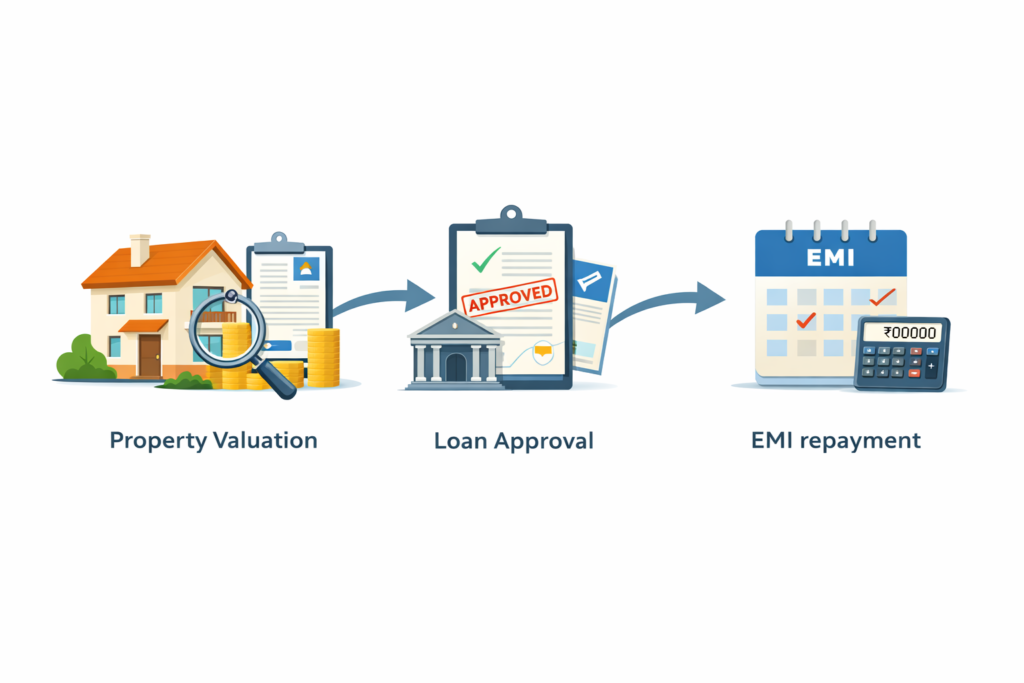
7. Application Process
Choose a bank/NBFC and check eligibility.
Submit the application form with documents.
Property and income verification.
Loan sanction and agreement signing.
Loan disbursement to your account.
8. Interest Rates & Repayment
Mortgage loan interest rates generally range from 8% to 11% per annum depending on your profile, income, and property type. Repayment can be done over 5 to 20 years, through fixed or floating EMIs.
9. Benefits
Large loan amount based on property value
Lower interest rate than personal loans
Flexible repayment tenure
Continue using your property during the loan period
10. Things to Consider
Always read the loan agreement carefully.
Ensure timely EMI payments to avoid penalties.
Compare offers from multiple banks before deciding.
Check processing fees, hidden charges, and prepayment terms.
11. Conclusion & Tips
A mortgage loan can be a powerful financial tool when managed responsibly. Use it for productive purposes — such as business expansion, education, or medical needs — and always plan your repayments in advance to maintain a healthy credit record.